
Labor Day often feels like the last long weekend of summer. Families may enjoy a cookout, spend time outdoors, or prepare for the school days ahead. But have you ever stopped to wonder why we celebrate Labor Day?
The story begins with workers marching together through the streets of New York City. Their story gives families an opportunity to talk about history, appreciate the people who serve our communities, and reflect on what God teaches us about work and rest.
What Is Labor Day?
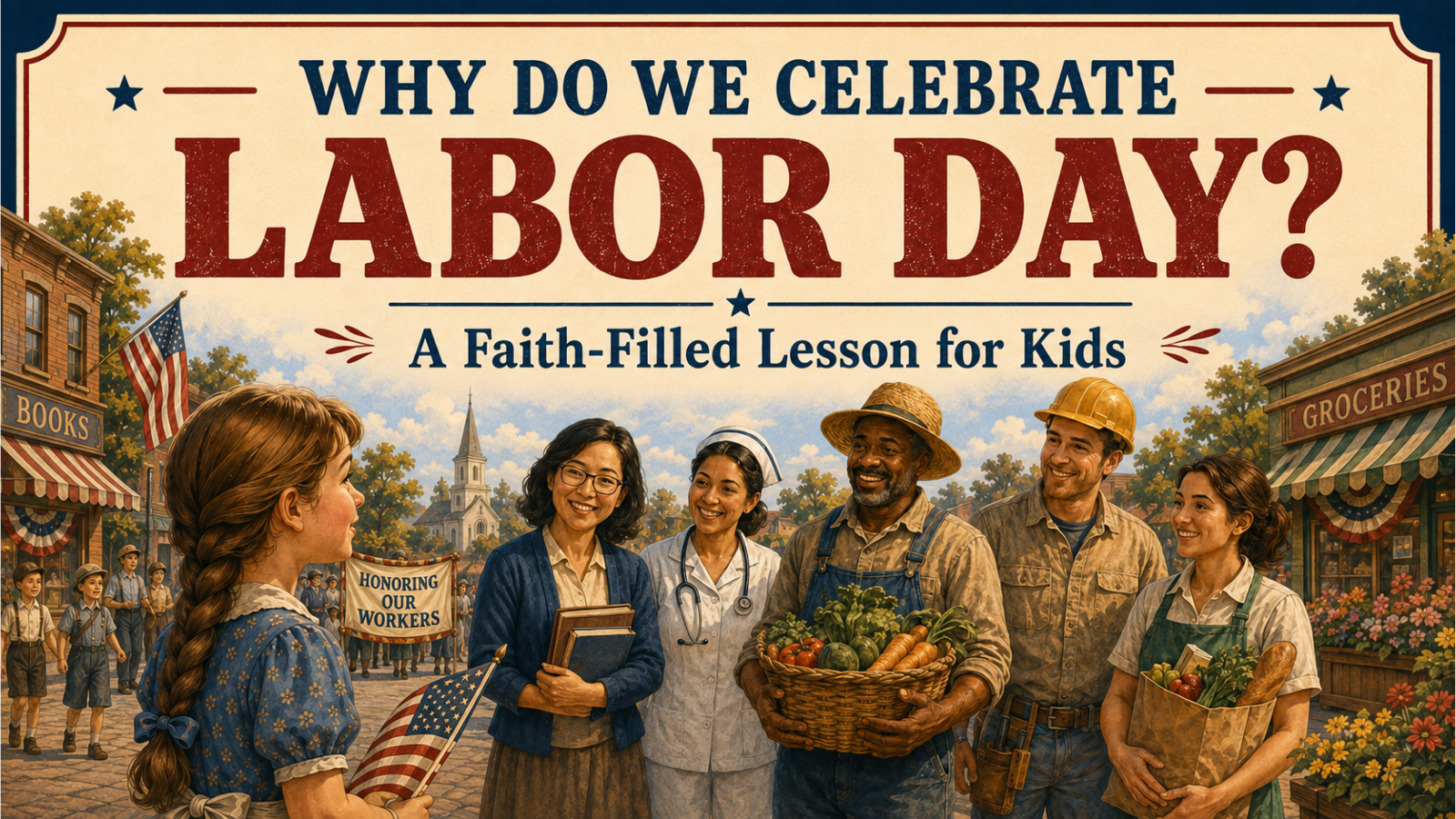
Labor Day is a United States holiday that honors workers and the contributions they make to our country. We depend on the work of many people every day—teachers, nurses, farmers, builders, grocery workers, sanitation workers, caregivers, delivery drivers, and countless others.
Every job may look different, but each worker has gifts, skills, and experiences that can help other people and strengthen a community.
In 2026, Labor Day falls on Monday, September 7.
When Was the First Labor Day?
The first Labor Day was celebrated on September 5, 1882, in New York City. Workers marched in a parade, and the day continued with a festival for workers and their families.
The celebration grew over time. In 1894, Labor Day became a national holiday observed on the first Monday in September.
The first Labor Day was more than a day away from work. It was a public way to recognize workers, their unity, and the important part they played in building the country.
To learn more, visit the U.S. Department of Labor’s page about the history of Labor Day.
What Can Labor Day Teach Children?
Children may not have jobs yet, but they already understand what it means to help. They put away toys, complete schoolwork, care for pets, help prepare meals, and encourage family members.
Labor Day can help children recognize that work is not only about earning money. Work can also be about using our abilities responsibly, helping someone who needs us, and contributing to the place where we live.
Ask your child:
- What work do you see people doing in our community?
- How does that work help other people?
- What gifts has God given you that you can use to help?
What Does God Teach Us About Work?
The Bible shows us that work can have purpose. In Genesis 2:15, God places Adam in the garden to cultivate and care for it. This reminds us that people were created with the ability to care for God’s world and one another.
Work can become an expression of love when we use our time and talents to serve. A teacher helps a child learn. A nurse cares for someone who is sick. A farmer grows food. A parent prepares a meal. A child helps a younger sibling.
Some acts of service receive a paycheck, while others do not. Both can matter deeply.
Most importantly, a person’s value does not depend on a job title, income, or amount of work completed. Every person has dignity because every person is created and loved by God.
God Also Gives Us Rest
Meaningful work is good, but we were not created to work every moment. Rest is also a gift from God.
Jesus invited his disciples to step away and rest after they had been busy serving others (Mark 6:31). Rest gives our bodies and minds time to recover. It also creates space for prayer, worship, family, and quiet.
Rest reminds us that we do not have to prove our worth by constantly being productive. We can pause, trust God, and receive his care.
Labor Day can therefore become more than a break from school or work. It can be a gentle reminder to seek a healthy rhythm of service and rest.
Who Keeps Our Community Going?
A healthy community depends on many people. Some work where everyone can see them, while others quietly complete tasks most of us rarely notice.
Think about the people who:
- Teach and care for children
- Grow, prepare, stock, and deliver food
- Build and repair homes, roads, and utilities
- Care for people who are sick or elderly
- Collect trash and keep public spaces clean
- Respond during emergencies
- Serve customers and help local businesses
- Volunteer at churches, schools, shelters, and community events
Each person is part of a larger community. When we notice their work and express gratitude, we help children understand that no community succeeds through one person alone.
A Simple Labor Day Family Activity
Invite each family member to name one worker who has helped them recently. It could be a teacher, bus driver, librarian, grocery worker, mail carrier, nurse, mechanic, or someone else.
Then choose one simple way to show appreciation:
- Say “thank you” in person.
- Draw a picture or make a card.
- Pray for that person and their family.
- Help with a task at home without being asked.
- Learn about a community job you have never considered before.
The goal is not to decide which job is most important. The goal is to notice the many people whose work helps others.
A Labor Day Prayer for Families
Dear God,
Thank you for the gifts and abilities you have given each person. Bless all those whose work serves our families and communities. Give strength to those who are tired, hope to those looking for work, protection to those whose jobs are difficult or dangerous, and rest to those who feel overwhelmed.
Help us use our own gifts with kindness, responsibility, and love. Teach us to work faithfully, rest peacefully, and appreciate the people around us.
“Prosper the work of our hands!” (Psalm 90:17)
Amen.
Remembering the Meaning of Labor Day
This Labor Day, families can enjoy the extra time together while also remembering why the holiday began. It is a day to honor workers, recognize the dignity of every person, and appreciate the many ways people serve one another.
Whether we are working, helping, learning, praying, or resting, we can ask God to guide the work of our hands and teach us to use our gifts for good.
Closing Invitation
Talk about it together: Who is one worker you would like to thank this Labor Day—and what would you like to say?
Leave a Reply