
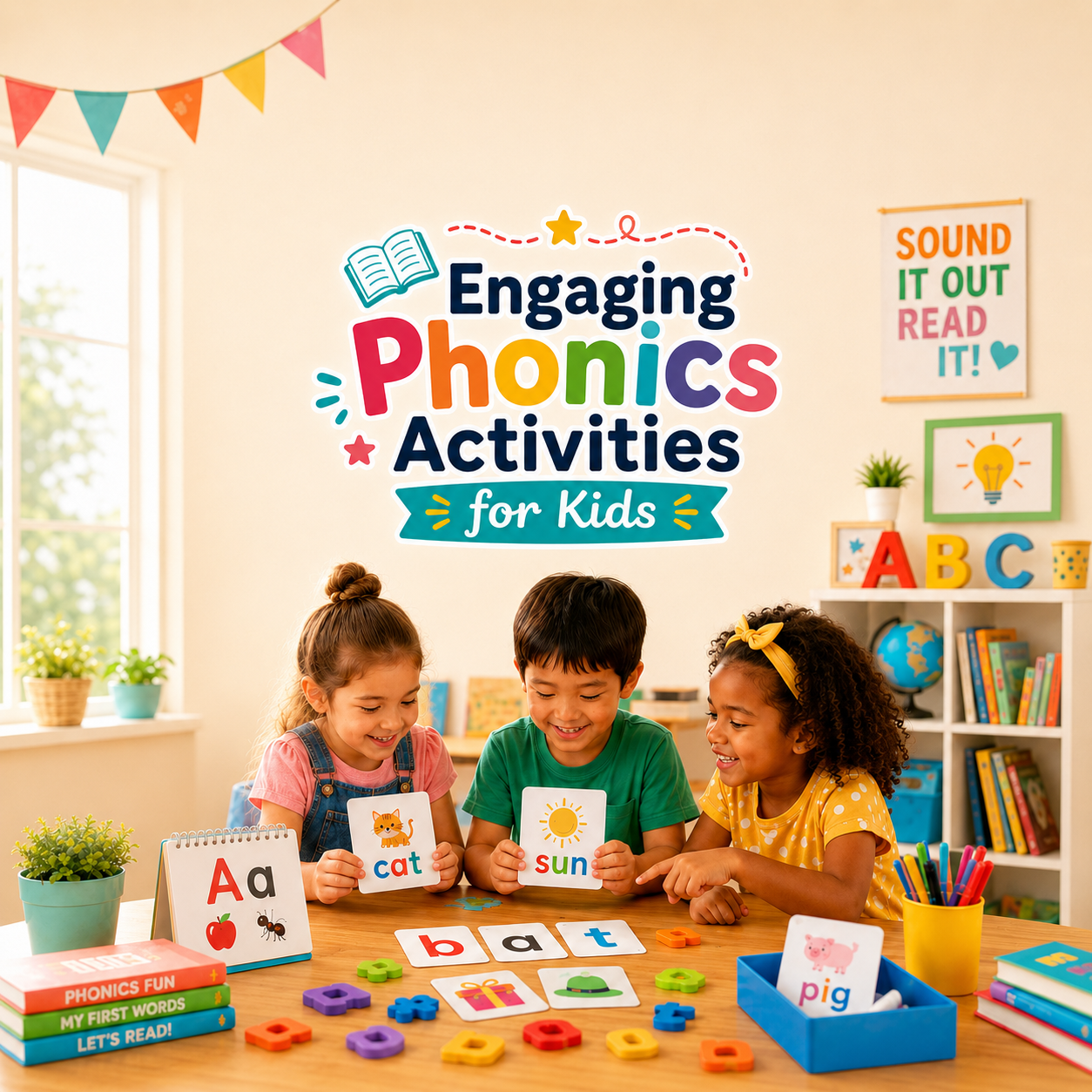
Phonics is essential for early reading skills. Here are some fun activities:
- Sound Matching Games
- Phonics Songs
- Interactive Storytime
These activities help children connect sounds with letters, making learning enjoyable!
Learning to read is a big step for young children, and phonics helps build the foundation they need to become confident readers. But phonics practice doesn’t have to feel like sitting at a table completing worksheet after worksheet.
Some of the best learning happens when children are talking, listening, moving, playing, and discovering sounds naturally.
Whether you are a parent helping your child at home or a teacher looking for simple classroom ideas, these activities can make phonics practice feel a little more fun and a lot more meaningful.
1. Go on a Sound Hunt
Choose one letter sound and look around the room for objects that begin with that sound.
For example, if you are practicing the /b/ sound, children might find:
- ball
- book
- bag
- block
Say each word slowly together and emphasize the beginning sound.
Try asking:
“What sound do you hear at the beginning of ball?”
This simple activity helps children connect the sounds they hear with real objects in their everyday world.
2. Play a Sound-Matching Game
Gather a few pictures or small objects and have children sort them according to their beginning sounds.
For example:
/m/ — moon, mouse, milk
/s/ — sun, sock, spoon
/t/ — turtle, table, toy
At first, keep the choices simple. As children become more confident, you can add additional sounds or ask them to listen for ending sounds too.
3. Stretch and Blend Words
Blending is an important skill children use when learning to read.
Choose a simple word such as cat and stretch the sounds:
/c/ /a/ /t/
Then slowly bring the sounds together:
c-a-t… cat!
You can use your fingers, blocks, or counters to represent each sound. Touch one object for each sound and then slide them together as you blend the word.
Other easy words to practice include:
sun, map, dog, sit, hop, red
4. Add Movement to Phonics Practice
Young children often learn better when they are able to move.
Write letters on pieces of paper and place them around the room. Say a sound and ask your child to:
- jump to the matching letter,
- touch the correct letter,
- walk to it,
- or toss a soft beanbag onto it.
Phonics practice can quickly turn into a game instead of feeling like another lesson.
5. Read and Notice Sounds Together
Reading aloud is one of the easiest ways to reinforce phonics naturally.
While reading a favorite picture book, occasionally stop and notice a word.
You might say:
“Look at the word sun. It starts with s. What sound does s make?”
You don’t need to stop on every page. One or two quick phonics moments during a story can be enough.
The goal is to help children begin noticing that the sounds they are learning appear in the books they already enjoy.
Keep Phonics Simple
Children don’t need complicated activities or expensive materials to practice phonics.
A few minutes of playful practice each day can help them begin recognizing sounds, blending words, and building confidence as readers.
Most importantly, give them time.
Learning to read develops little by little. Celebrate the small moments—the first sound they recognize, the first word they blend, and the first sentence they proudly read on their own.
Those little moments are where a love of reading begins.
Be Simple. Be Real. Kids
Learning • Growing • Faith
Leave a Reply