
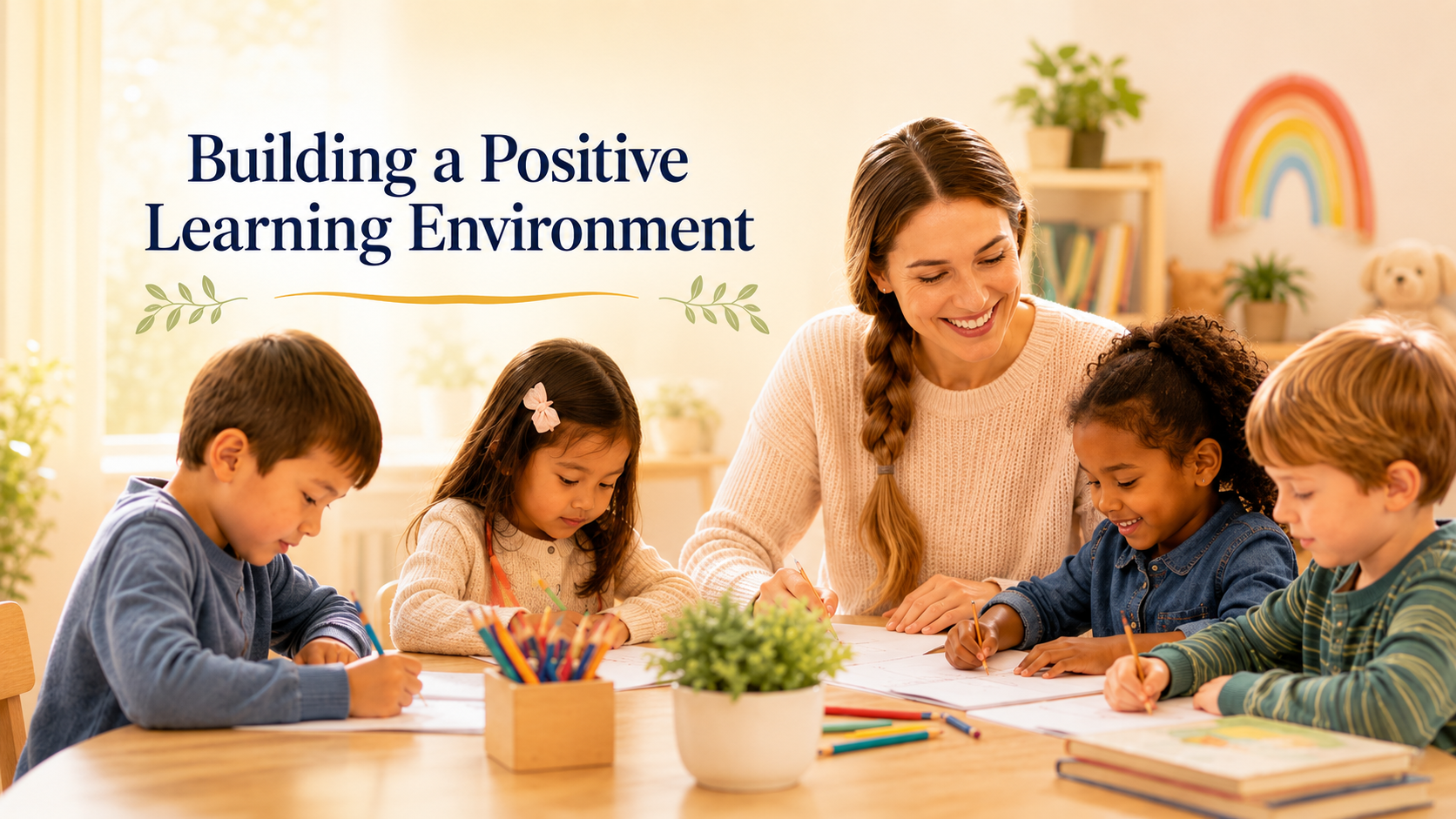
A supportive environment is key to learning:
- Encourage Open Communication
- Celebrate Achievements
- Provide Comfort and Safety
These strategies help children feel valued and motivated to learn.
Children learn best when they feel safe, welcomed, encouraged, and valued.
Before a child can focus on reading, writing, math, or any other subject, they need to know that the learning space is a place where it is okay to ask questions, make mistakes, try again, and simply be themselves.
A positive learning environment does not have to be perfect. It is created through the small things we do each day—our words, our routines, our patience, and the way we respond when a child is struggling.
Start With Connection
One of the most important parts of learning is connection.
A simple smile, greeting a child by name, listening when they speak, or taking a moment to ask how they are doing can make a difference.
When children know that the adults around them care about them, they are more likely to participate, ask for help, and take healthy risks in their learning.
Sometimes the most powerful message we can give a child is:
“I see you. I am glad you are here. We can figure this out together.”
Create a Safe Place to Make Mistakes
Children need to know that mistakes are part of learning.
Instead of focusing only on getting the correct answer, encourage children to think about what they tried and what they might do differently next time.
You might say:
- “That was a good try.”
- “Show me how you were thinking.”
- “Let’s look at it together.”
- “What could we try next?”
When mistakes are treated as opportunities to learn rather than something to fear, children begin to develop confidence and persistence.
Encourage Open Communication
Give children opportunities to share their ideas, questions, and feelings.
Some children speak easily in a group while others need more time before they feel comfortable participating. Both are okay.
Listen patiently and give children space to think.
A supportive classroom or learning space allows children to know that their thoughts matter—even when they are still learning how to express them.
Celebrate Growth, Not Just Perfect Scores
Learning happens one small step at a time.
Celebrate the child who finally sounds out a difficult word.
Celebrate the child who keeps working on a math problem.
Celebrate the child who raises a hand for the first time.
Celebrate effort, curiosity, kindness, and perseverance.
A simple “Look how much you have learned” can mean more to a child than we sometimes realize.
Provide Comfort and Consistency
Children often feel more secure when they know what to expect.
Simple routines can create a sense of calm and stability. This might include having a regular place for supplies, beginning the day with the same morning routine, or giving children a warning before moving from one activity to another.
A learning environment does not need to be elaborate or expensive.
It needs to feel safe, predictable, and cared for.
Make Room for Curiosity
Children are naturally curious.
Give them opportunities to wonder, explore, ask questions, read books, solve problems, create, and discover.
Learning becomes much more meaningful when children are not simply completing a worksheet but are encouraged to think:
“Why?”
“What happens if…?”
“Can I try it another way?”
Curiosity is one of the beautiful beginnings of lifelong learning.
A Positive Environment Begins With How a Child Feels
At the end of the day, children may not remember every lesson we taught.
But they often remember how they felt while they were learning.
Did they feel embarrassed—or encouraged?
Did they feel afraid to make a mistake—or safe enough to try?
Did they feel invisible—or did they know someone believed in them?
Creating a positive learning environment begins with helping children know that learning is a journey and that they do not have to have everything figured out today.
Sometimes the best thing we can give a child is simply a safe place to learn, grow, and try again tomorrow.
Leave a Reply